Franzisca Zanker and Dina Wahba shed light on Egypt's program for the voluntary return of Sudanese refugees for The Conversation. Their conclusion: Given the political climate in Egypt, the voluntary nature of the initiative is questionable.
ABI staff member Franzisca Zanker and Ronald Kalyango Sebba analyze the migration agreement between Uganda and the US for The Conversation.
Anas Ansar's first monograph, “Rohingyas and the Geographies of Precarity in Exile: Everyday Life in Bangladesh and Malaysia,” has been published in the Bonn Center for Dependency and Slavery Studies series with De Gruyter.
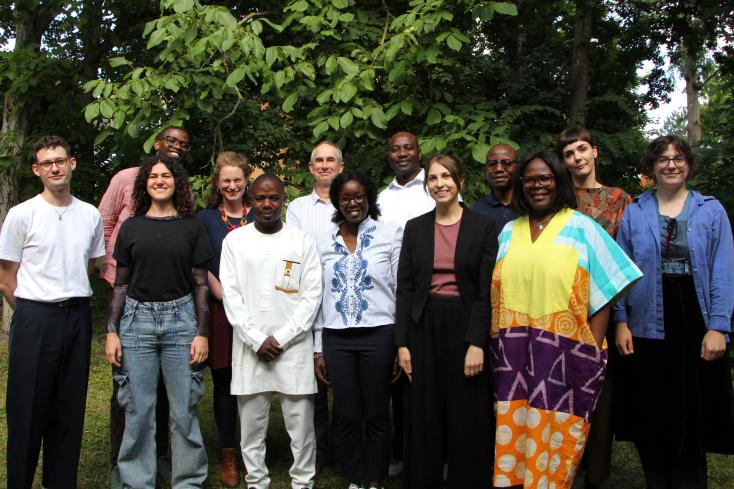
On July 9–10, 2025, the PolMig Team at the ABI hosted an authors’ workshop for the special issue "Categorizing People on the Move in Africa," edited by Rose Jaji and Franzisca Zanker, to be published in Comparative Migration Studies.
The ABI welcomes Sophia Stille, Jamila Hamidu and Edwin Mutyenyoka as new staff members in the PolMig project!
Franzisca Zanker argues in the Public Anthropologist that while the pressure to comply with the EU regarding migration-related issues is high due to asymmetric power balances, African states developed subtle and often implicit ways of responding.
Anas Ansar examines the connections between increasing violence in Rohingya refugee camps and the escalating war in Myanmar's Rakhine region in a blog post at XCEPT.
In the latest issue of Routed Magazine #26, ABI staff members and associates reflect on the impacts of COVID-19 on im/mobility in the Global North and South.
In an interview with Table.Briefings, Franzisca Zanker calls the political initiatives to increase European deportations to Somalia ‘symbolic politics’, which is ‘short-term thinking’.
In the SWP Megatrends Afrika Spotlight, Franzisca Zanker discusses colonial continuities in the context of the growing restriction of legal migration opportunities to Europe: unequal mobility regulations can be traced back to racialised structures.